
Restaurant & Commercial Kitchen Pest Control Sydney
On Call Pest Control provides commercial pest control programs for Sydney restaurants, pubs, clubs, caterers and commercial kitchens. We eliminate the German cockroaches, rats and mice that busy kitchens attract, and we treat around your service so you never close for a night. You get the audit-ready reports that council environmental health officers and third-party auditors expect. Free site assessment and fixed monthly pricing. Call 0426 511 911.

Restaurant Pest Control at a Glance
How often
A Sydney restaurant or commercial kitchen should have a professional pest service at least monthly. High-volume kitchens, venues sharing a laneway with other food businesses, and any kitchen with current activity may need fortnightly service until it is under control.
The rule
Under Food Standards Code 3.2.2, clause 24, every NSW food business must take all practicable measures to prevent pests entering and to eradicate and prevent pest harbourage.
When we treat
After close, before prep, or on your closed day. Your service is never interrupted.
Paperwork
A report after every visit, a site map of bait stations and monitors, product labels and safety data sheets, the technician’s licence and our insurance certificate. All of it is kept in an on-site pest folder.
Failed inspection?
Call
0426 511 911.
We prioritise food businesses with an inspection finding.
Why Commercial Kitchens Breed Pests So Quickly
A commercial kitchen runs hot and wet for 12 or more hours a day, and every crack in it collects grease and food. For the German cockroach, the pest behind most failed restaurant inspections, that is ideal: a single female can produce hundreds of offspring over her life, and a kitchen colony can grow from a few cockroaches to thousands in weeks. Rats and mice follow the same food and water, mostly from bin areas, laneways and drains.
Kitchens also have features most buildings don’t, and those are exactly where pests settle:
| Kitchen zone | Where pests hide | What we do |
|---|---|---|
| Cookline | Behind and under fryers, ovens and woks; hollow stainless bench legs; gaps where the bench meets the wall; under canopy filters | Gel bait and insect growth regulator in voids and hollow legs; we flag grease build-up for cleaning |
| Dish area | Dishwasher motor housing, under the sink, floor wastes, wall cavities behind splashbacks | Void treatment, drain-area treatment, sealing recommendations |
| Cool room and fridges | Door seals, hinges, panel joins, compressor and fan housings, under-bench fridge motors | Targeted baiting of warm motor areas and seal gaps |
| Dry store | Shelving brackets, cardboard cartons, bulk flour, rice and spices (weevils and pantry moths) | Treatment, stock-rotation advice and monitoring |
| Bar | Bar fridges, glass-washers, beer-line drip trays, bar drains (fruit flies and drain flies) | Baiting, identifying breeding sites and drain-hygiene advice |
| Bins, grease trap and laneway | Bin enclosure, grease arrestor pit, stormwater pits, rear door gaps | Lockable rodent stations, perimeter treatment, door-seal and proofing advice |
Treating only where staff have seen cockroaches misses most of the colony. Our technicians work through every zone on the first visit and map where activity is, so each later service targets what is actually there.
Pest Control and the Law: What NSW Requires of Food Businesses
Every NSW restaurant and commercial kitchen must comply with the Food Standards Code. The pest rules are in Standard 3.2.2, clause 24. Council EHOs check them at routine inspections, and third-party and franchise auditors usually do too.
| Clause 24 requires you to… | What it means in a commercial kitchen |
|---|---|
| Not permit live animals in areas where food is handled (other than seafood or fish) | No animals in the kitchen, stores or bar prep areas. |
| Take all practicable measures to prevent pests entering the premises | Self-closing rear doors with brush seals, flyscreens, sealed penetrations for gas, water and electrical lines, a lidded bin area and a well-maintained grease trap. |
| Take all practicable measures to eradicate and prevent the harbourage of pests | A regular professional pest program, cleaning behind and under equipment, sealed cove skirting and wall gaps, and prompt treatment when activity is found. |
Inspectors look for signs of pest activity, such as droppings, egg cases, live or dead insects and gnaw marks, and for evidence of an effective pest control program. Serious or repeated breaches can lead to improvement notices, penalty notices, prohibition orders that close the kitchen, and publication on the NSW Food Authority’s public Name and Shame register. Under Standard 3.2.2A, most restaurants must also have a certified Food Safety Supervisor, who is usually the right person to own the pest folder and follow up our recommendations.
Source: NSW Food Authority, Food Standards Code 3.2.2 and the food premises assessment report.

What Our Restaurant Pest Control Program Includes
- Free site assessment.We inspect the kitchen, cool rooms, dry store, bar, dining room, bin area, grease trap surrounds, and roof and subfloor access. You then get a fixed program price.
- German cockroach control.Professional gel baits and insect growth regulators go into voids, hinges, bench legs and equipment housings. We never spray onto food-contact surfaces.
- Clean-out treatment for heavy infestations.We schedule it for your closed day, with clear instructions on what to cover, remove and wipe down before reopening.
- Rodent program.Lockable, tamper-resistant bait stations go outside, with non-toxic monitors or traps inside. Each one is numbered, mapped and checked every visit.
- Stored-product pest checksin dry stores, with stock-rotation advice.
- Fly and drain-fly advicefor kitchens and bars. We identify breeding sites, recommend drain cleaning and suggest exclusion measures.
- Proofing and hygiene recommendationsin writing, so you, your cleaners or your landlord can act on them.
- A service report after every visit, plus an on-site pest folder that is always ready for an EHO or auditor.
- Call-backs between visitswhenever staff see activity.
How Often Should a Restaurant Have Pest Control?
| Type of venue | Our recommended service frequency |
|---|---|
| Full-service restaurant with commercial kitchen | Monthly |
| High-volume or 7-day kitchen, or one sharing a laneway with other food businesses | Monthly, or fortnightly in summer |
| Pub, club or RSL kitchen and bar | Monthly |
| Catering, production or dark kitchen | Monthly |
| Kitchen with current activity or a recent failed inspection | Fortnightly until clear, then monthly |
| Commercial kitchen used occasionally (event venue, function centre) | Every 6–8 weeks, plus a service before major events |
German cockroaches complete their life cycle in about two to three months in a warm kitchen, which is why a monthly service catches new activity before it becomes an infestation.
Treatments That Fit Around Your Service
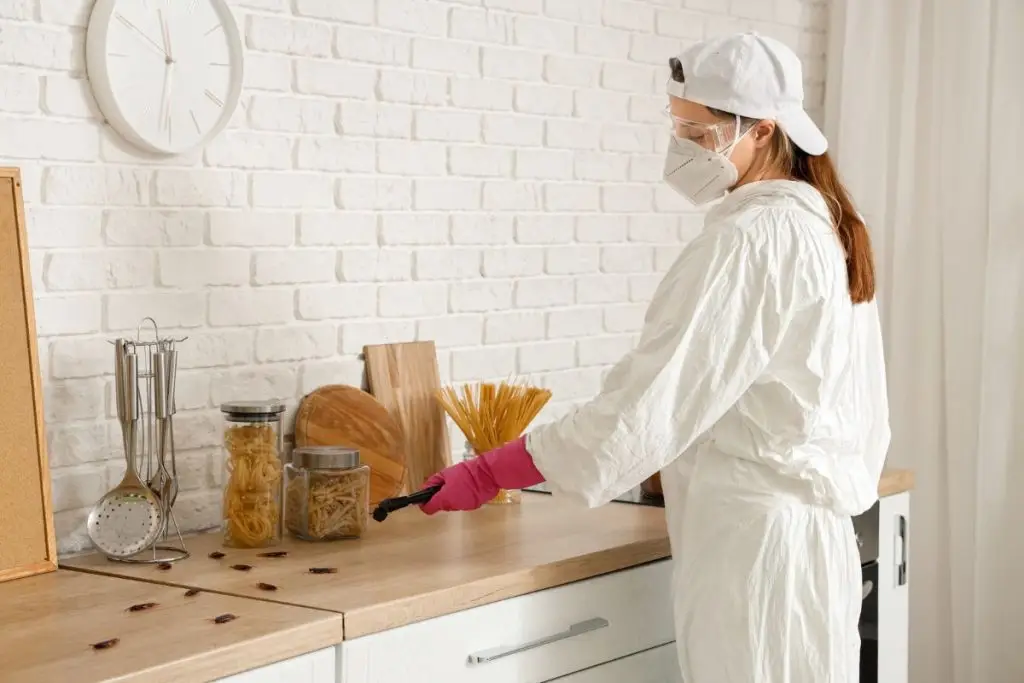
Restaurants can’t close for pest control, and they shouldn’t have to. We schedule routine services late at night after close, early in the morning before prep starts, or on your closed day, whichever suits your kitchen. Gel baits and monitoring stations have no odour and no withholding period, so the kitchen is ready for the next shift as normal. Where a stronger clean-out is needed, we book it for a closed day and tell you exactly what to cover, what to remove and when the kitchen can be used again.
We stay discreet in front-of-house areas. We never treat during service, and unmarked vehicles are available on request.
Multi-Venue Groups, Pubs, Clubs and Caterers
For hospitality groups running several venues, we provide the same program and the same report format at every site, so head office can see pest activity across the group at a glance. We also work with pub, club and RSL kitchens and bars, function centres, catering kitchens and delivery-only dark kitchens. Where a franchise or corporate auditor sets specific requirements, we match our reporting to them.
Failed Inspection or Pest Complaint? What to Do in the Next 24 Hours
- Call us on 0426 511 911.We prioritise food businesses with an inspection finding and aim to treat the same day or that night after close.
- Don’t use supermarket sprays or bombs.They scatter cockroaches deeper into the walls and can contaminate food and surfaces.
- Deep clean the affected area.Pull out mobile equipment, degrease behind the cookline and clean floor wastes.
- Throw out any food that may be contaminatedand record what you discarded.
- Fix the obvious entry pointsthe inspector noted, such as door gaps, damaged seals and open penetrations.
- Keep our treatment report.It documents your corrective action for the re-inspection.
- Move to a regular programso the problem doesn’t come back.
Restaurant Pests We Treat
Our technicians treat German cockroaches, American cockroaches from drains and grease traps through our cockroach control, rats and mice with our rodent control, ants around sugar and outdoor dining, wasps and bees around beer gardens and awnings, and mosquitoes in courtyards and outdoor dining areas. We also identify stored-product pests, fruit flies and drain flies, and advise on how to remove their source.
Kitchen Habits That Keep Pests Out
- Degrease behind and under the cookline at least weekly, not just the visible surfaces.
- Keep floor wastes, drain channels and bar drains clean, and run water through any drains that are rarely used.
- Have the grease trap pumped on schedule and keep its surrounds clean.
- Unpack deliveries straight away. Don’t store cardboard in the kitchen or dry store.
- Rotate dry stock first-in, first-out and keep opened goods in sealed containers.
- Keep rear doors closed during service and replace worn brush seals.
- Lid every bin and hose out the bin area regularly.
- Report every sighting to your pest technician straight away.
Restaurant Pest Control Across Sydney
We service restaurants and commercial kitchens across Sydney Metro, from CBD and inner-city dining strips to suburban pubs and clubs. Areas include Surry Hills, Marrickville, Enmore, Camperdown, Haberfield, Burwood, Woolloomooloo, Parramatta, Blacktown and Liverpool. We also look after cafés and other food businesses. See our full commercial pest control service or browse all service areas.
Why Sydney Restaurants Choose On Call Pest Control
- Commercial kitchen know-how.We check bench legs, cool-room seals and grease trap surrounds, not just under the sink.
- No lost service.We treat after close, before prep or on your closed day.
- Audit-ready paperworkafter every visit, in a consistent format across all your venues.
- Same-day responseafter a failed inspection.
- Fixed monthly pricingafter a free site assessment.
- Licensed and insured techniciansusing APVMA-registered products.
- A 5.0-star Google ratingfrom a family-run Sydney business.
Restaurant & Commercial Kitchen Pest Control – FAQs
How much does pest control cost for a restaurant in Sydney?
Restaurant pest control in Sydney is usually priced as a fixed monthly program. The price depends on the size of the kitchen, the number of zones such as cool rooms, bars and dry stores, and the level of current activity. On Call Pest Control provides a free site assessment and a fixed program price with no hidden extras.
How often should a restaurant have pest control in NSW?
Most Sydney restaurants and commercial kitchens should have a professional pest service at least monthly. High-volume kitchens, venues sharing laneways with other food businesses, and any kitchen with current activity or a recent failed inspection may need fortnightly service until the problem is under control.
Is pest control a legal requirement for restaurants in NSW?
Food Standards Code 3.2.2, clause 24 requires every NSW food business to take all practicable measures to prevent pests entering and to eradicate and prevent pest harbourage. It does not set a visit frequency, but council inspectors and auditors look for evidence of an effective pest program. A documented professional service is the clearest way to show compliance.
Do we have to close the kitchen for pest control?
No. Routine services use gel baits, insect growth regulators and monitoring stations, which have no odour and no withholding period. We treat after close, before prep or on your closed day. If a heavier clean-out treatment is needed, we schedule it for a closed day and explain what to cover and when you can reopen.
Why do cockroaches keep coming back in our commercial kitchen?
Usually because the treatment missed the colony’s real harbourage. That can be hollow stainless bench legs, gaps behind cove skirting, under-bench fridge motors, cool-room seals or the grease trap area. Sprays also scatter cockroaches deeper into the walls. A systematic program that baits every zone, with cleaning and sealing to match, stops the cycle.
Can grease traps cause cockroach and rat problems?
Yes. A poorly maintained grease arrestor and its surrounds attract American cockroaches and rats. Regular pumping, a clean pit lid and surrounds, and perimeter treatment with rodent stations around the bin and grease trap area reduce the pressure.
What should we do if the council inspector finds pests?
Call a licensed pest controller the same day and don’t use supermarket sprays. Deep clean the affected area, throw out any contaminated food and fix the entry points the inspector noted. Keep the treatment report as evidence of corrective action. On Call Pest Control prioritises food businesses with inspection findings.
What paperwork will we get for inspections and audits?
After every visit you receive a report listing findings, treatments, products used and corrective actions. Your on-site pest folder also contains a site map of bait stations and monitors, product labels and safety data sheets, the technician’s licence details and our insurance certificate of currency.
Are pest treatments safe in a commercial kitchen?
Yes. We use APVMA-registered products applied by licensed technicians. Gels go into voids and cracks, never onto food-contact surfaces. Rodent stations are lockable and tamper-resistant. Any treatment that needs food or equipment covered is scheduled for a closed period, with clear re-entry instructions.
Do you service multi-venue hospitality groups?
Yes. We run the same program and report format across every venue in a group, so head office can compare activity between sites. Where a franchise or corporate auditor has specific reporting requirements, we match them.
Protect your restaurant – Book a free site assessment
Commercial kitchen pest control programs across Sydney · treated around your service · audit-ready reports. Call 0426 511 911 or email info@oncallpestcontrol.com.au.
Contact Information
Please use the following details to contact us.
- 0426 511 911
- info@oncallpestcontrol.com.au
- 215-219 George Street Liverpool NSW 2170 Australia
Contact Us
Please fill out the following form to contact us. One of our team members will get back to you as soon as possible.