Factory Pest Control Sydney – Audit-Ready Pest Management for Manufacturers
On Call Pest Control designs integrated pest management (IPM) programs for Sydney factories, manufacturing plants and food production sites. We control rodents, cockroaches, flies, stored product pests and spiders using numbered, mapped monitoring devices and targeted treatments. We work around your production schedule and provide the documentation your HACCP, BRCGS, SQF or retailer auditor will ask for. Free site assessment and fixed program pricing. Call 0426 511 911.
Factory Pest Control at a Glance
How often
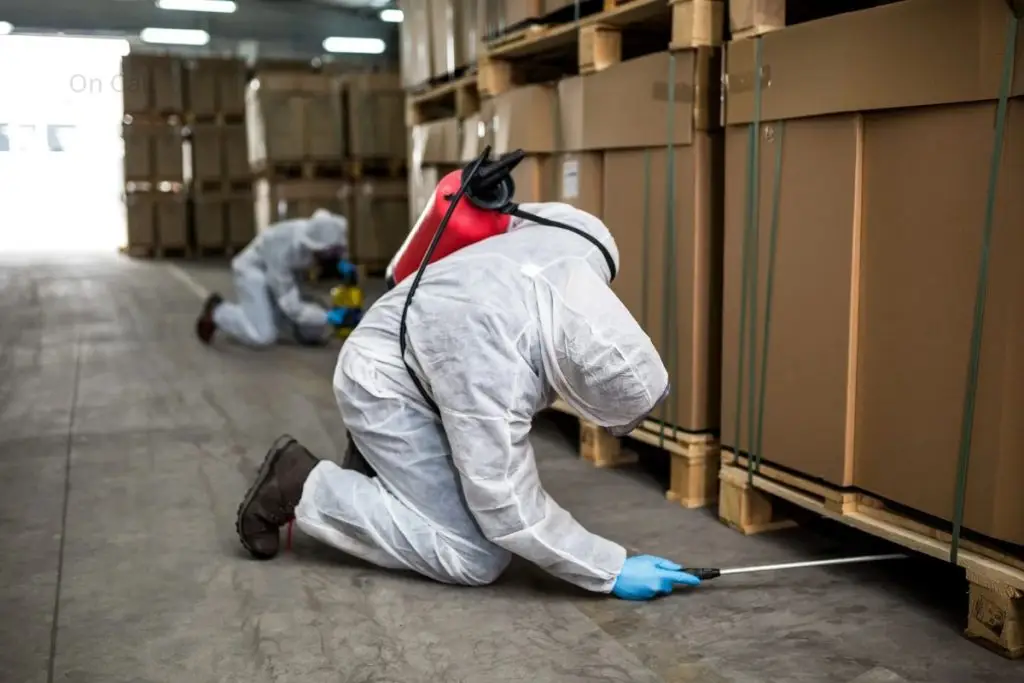
Most factories need a professional pest service monthly. Food manufacturers and sites with external audits usually service monthly or fortnightly. Low-risk, non-food manufacturing may suit every two to three months.
Method
Integrated pest management. That means a site risk assessment, perimeter rodent stations, non-toxic monitors inside production areas, insect and pheromone monitoring, targeted treatment, exclusion and trend reporting.
Compliance basis
Food Standards Code 3.2.2 clause 24 for food businesses; HACCP, BRCGS, SQF, FSSC 22000 and retailer audit requirements; WHS duties for chemicals and safe workplaces.
Documentation
Site plan, device register, service reports, activity trends, corrective actions, pesticide application records, SDS, licence and insurance.
Response
Same-day or next-day call-outs for pest activity across Sydney.
Why Factories Need a Specialist Pest Program
A factory is not a big house, and general pest spraying doesn’t protect one. Large roller doors stay open for forklifts, pallets and raw materials arrive daily from other sites, and wall cavities, cable trays and under-machine voids give pests places to breed out of sight. Staff canteens and waste compactors supply the food. One rodent in a raw material store, or one cockroach found by an auditor, can mean a failed audit, a product recall, a lost retail contract or a shutdown order.
The answer is a documented, monitored program designed around how your site works. Pests are detected early, treated precisely and recorded clearly, so you can show an auditor or inspector exactly what is happening and what was done about it.
Where Pests Get Into and Live in a Factory
| Factory zone | Main pests | Why they’re there |
|---|---|---|
| Loading docks and roller doors | Rats, mice, flies, birds | Doors open for long periods, gaps under dock levellers, damaged brush seals |
| Raw material and ingredient stores | Stored product pests (weevils, flour and warehouse beetles, Indian meal moth), mice | Bulk grain, flour, spices, seeds and cardboard; slow-moving stock |
| Production floor | German cockroaches, mice, flies | Warmth from motors and ovens, voids under machinery, cable trays, floor drains |
| Packaging and finished goods | Mice, cockroaches, spiders, silverfish | Cardboard, paper and pallets stacked against walls |
| Canteen, lunch room and amenities | German cockroaches, ants | Food scraps, fridges, microwaves, dishwashers |
| Waste, compactor and recycling area | Rats, flies, American cockroaches | Organic waste, spillage, stormwater pits |
| External yard, pallets and fence lines | Rats, redback spiders, wasps, termites | Stored pallets and timber, vegetation, drainage, neighbouring sites |
Our Integrated Pest Management (IPM) Program for Factories
IPM means preventing pests first, monitoring constantly, and treating only where and when it’s needed, with the least risk to your product, your people and the environment. This is how we run it on your site:
- Site survey and pest risk assessment.A licensed technician walks the whole site with your operations or QA manager. We record pest history, entry points, conducive conditions, sensitive zones and your audit standard.
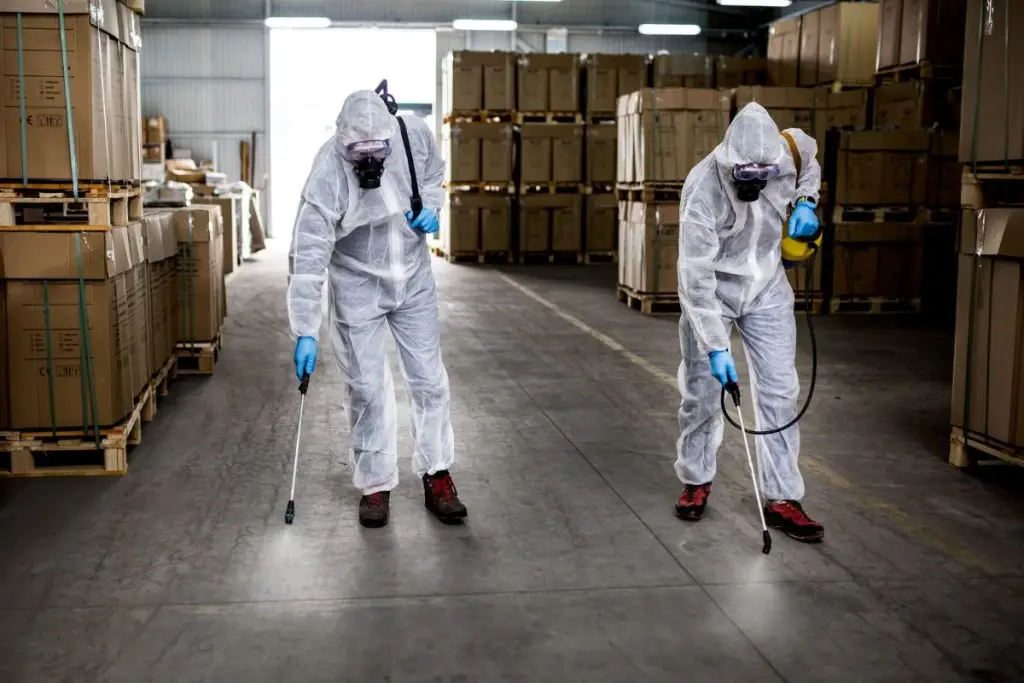
- Site plan and device register.Every device is numbered and marked on a site plan. That includes external lockable rodent bait stations at set intervals around the perimeter and beside doors, non-toxic monitors or mechanical traps inside, insect monitors, and pheromone traps where stored product pests are a risk.
- Zoned treatment.No toxic rodenticide is used inside production or food-handling areas. Inside, we rely on monitoring and mechanical control. Cockroaches in amenities and plant voids are treated with gel baits and insect growth regulators, never sprayed over product, packaging or food-contact surfaces.
- Scheduled servicing.Every device is inspected and its activity recorded at each visit, with treatment wherever activity is found.
- Trend reporting and action thresholds.Activity is tracked over time. When a reading goes over the agreed threshold, we investigate, act and record the corrective action.
- Exclusion and hygiene recommendations.We give you a written list of door seals, gaps, penetrations, drainage, stacking and waste issues, ranked by risk, so maintenance can fix them.
- Annual review.Once a year we carry out an in-depth review of the program and the site’s pest risk, and adjust device numbers, placement and frequency.
Documentation for HACCP, BRCGS, SQF and Retailer Audits
| Document | What it shows the auditor |
|---|---|
| Service agreement and scope | Visit frequency, areas covered and pests targeted |
| Site plan and device register | Where every numbered station, monitor and trap is located |
| Service reports | What was inspected, found and treated at each visit |
| Device activity records and trend analysis | Activity over time, with thresholds and when they were exceeded |
| Corrective action log | What was done about each finding, and when |
| Pesticide application records | Product, quantity, location and date of every treatment |
| Product labels and safety data sheets (SDS) | Every chemical approved for use on the site |
| Technician licence and company insurance | NSW EPA pest management licence and certificate of currency |
| Annual pest risk review | An in-depth review of the program and recommended changes |
For any NSW food business, Food Standards Code Standard 3.2.2, clause 24 requires all practicable measures to prevent pests entering and to eradicate and prevent their harbourage. NSW pesticide rules also require commercial pesticide applications to be recorded. Our application records meet that requirement and are available whenever you need them.
Factory Types We Service
| Industry | Main pest risks and focus |
|---|---|
| Food and beverage manufacturing | Rodents, stored product pests, cockroaches, flies. Highest audit scrutiny, with no toxic bait in production |
| Meat, dairy, seafood and egg processing | Flies, rodents, cockroaches in wet and cold areas. NSW Food Authority licensed sites |
| Bakery, confectionery and snack production | Flour beetles, weevils, Indian meal moth, mice |
| Packaging, printing and paper | Mice, cockroaches and silverfish in cardboard and paper stock |
| Plastics, metal fabrication and engineering | Rats chewing cabling, spiders, wasps, cockroaches in amenities |
| Pharmaceutical, cosmetics and chemical | Clean-area monitoring, documentation and low-chemical methods |
| Furniture, timber and joinery | Termites and borers in timber stock, spiders, rodents |
| Recycling and waste facilities | Rats, flies, cockroaches and birds |
| Cold storage and chilled production | Mice and cockroaches near compressors, door seals and loading areas |
Factory Pests We Control
Rats and mice
Rodents are the number one factory pest risk. They contaminate product, chew through cabling, conveyor belts and packaging, and are the most common cause of serious audit findings. Our rodent control program combines perimeter bait stations, internal monitoring and trapping, proofing of doors and penetrations, and fast response when activity shows up.
Cockroaches
German cockroaches breed in canteens, amenities and the warm voids of machinery. American cockroaches come up from drains and stormwater pits. See our German cockroach control and cockroach control.
Stored product pests
Weevils, flour and warehouse beetles, cigarette beetles and Indian meal moth arrive in raw materials and spread through ingredient stores. We use pheromone monitoring to catch them early, then targeted treatment and stock-rotation advice. Where infested stock has to be quarantined or rejected, our report supports that decision.
Flies
Flies breed in waste and drains and carry contamination onto product. We identify the breeding sources and recommend exclusion measures such as strip curtains, rapid-roll doors, screens and correctly positioned fly control units, along with waste-handling changes.
Spiders, wasps and bees
Redback spiders in pallets, outdoor stacks and fence lines are a genuine WHS risk for forklift drivers and yard staff. Our spider control treats yards, pallet stores and building perimeters. We also remove wasp nests from docks and awnings and relocate bees wherever possible.
Termites, ants and mosquitoes
Timber pallets, racking and landscaped borders can bring in termites. We also treat ant trails into amenities and mosquito breeding in stormwater detention basins and drainage.
How Often Should a Factory Have Pest Control?
| Site type | Our recommended service frequency |
|---|---|
| Food manufacturing with BRCGS, SQF or retailer audits | Monthly at minimum; fortnightly for high-risk sites or during active issues |
| Other food production or NSW Food Authority licensed sites | Monthly |
| Packaging, printing and paper manufacturing | Monthly |
| General manufacturing and engineering | Every 1–2 months |
| Low-risk light industrial units | Every 2–3 months |
| Any site with current activity or an audit finding | Immediate response, then increased frequency until clear |
Your auditor or customer contract may set a minimum frequency. We set your program to meet or exceed it.
Working Around Your Production
Downtime costs money, so we plan servicing around your shifts. Routine device checks happen during normal operation and don’t stop the line. Any treatment that needs a zone clear is scheduled for shift changes, nights, weekends or planned maintenance shutdowns. Every technician follows your site induction, PPE, sign-in and permit-to-work rules, and we tell your team in advance what will be treated, where, and when the area can be used again.
Pricing for Factory Pest Control
Factory pest control is priced as a fixed monthly or per-visit program fee. The price depends on the size of the site, the number of devices, the visit frequency, your audit standard and the level of current activity. We start with a free site assessment, then give you a written scope and fixed price with no hidden extras. One-off general treatments for small industrial units start from $89.

Factory Pest Prevention Checklist
- Keep roller doors closed when not in use and fit brush seals or rapid-roll doors.
- Seal gaps around pipes, conduits and cable entries, and under dock levellers.
- Store pallets and stock off the floor and at least 450 mm from walls, so inspection aisles stay clear.
- Inspect incoming raw materials and pallets for pests before they enter storage.
- Rotate stock first-in, first-out and clean up spillage straight away.
- Keep waste and compactor areas clean, lidded and away from doors.
- Clear vegetation, rubbish and stored timber away from external walls.
- Tell your pest provider about every sighting, so it’s recorded and acted on.
Factory Pest Control Across Sydney’s Industrial Areas
We are based in Liverpool, close to the Moorebank, Prestons and Ingleburn industrial areas, and we service factories across Greater Sydney. That includes Wetherill Park, Smithfield, Eastern Creek, Erskine Park, Huntingwood, Arndell Park, Seven Hills, Smeaton Grange, Milperra, Revesby, Silverwater, Rydalmere, Alexandria, Botany, Mascot, Taren Point and Brookvale. Local pages: Liverpool, Blacktown, Parramatta, Marrickville, Tempe, Burwood and Harrington Park. See our full commercial pest control service.
Why Sydney Manufacturers Choose On Call Pest Control
- Audit-ready documentationbuilt around HACCP, BRCGS, SQF and retailer expectations.
- A true IPM program, with numbered devices, trend reporting and corrective-action records.
- Food-safe methods, with no toxic rodenticide inside production areas.
- Planned around your shifts, and compliant with your induction and PPE rules.
- Same-day or next-day responseto activity or audit findings.
- NSW EPA-licensed, insured technicians, and a 5.0-star Google rating.
- A family-run business based in Western Sydney, so you deal directly with the people doing the work.
Factory Pest Control – Frequently Asked Questions
How often should a factory have pest control?
Most Sydney factories should have a professional pest service monthly. Food manufacturers and sites audited to BRCGS, SQF or retailer standards usually need monthly or fortnightly service. Low-risk light industrial sites may suit every two to three months. Any site with active pests or an audit finding needs an immediate response and more frequent visits until the problem is under control.
How much does factory pest control cost in Sydney?
Factory pest control is usually priced as a fixed monthly or per-visit program fee. The price depends on site size, the number of monitoring devices, visit frequency, audit requirements and current activity. On Call Pest Control provides a free site assessment and a written fixed-price scope. One-off treatments for small industrial units start from $89.
What is integrated pest management (IPM) in a factory?
IPM is a prevention-first approach. It combines a site risk assessment, numbered monitoring devices, exclusion and hygiene improvements, targeted treatment only where activity is found, and documented trend reporting. It controls pests with the least risk to product, staff and the environment, and it is the approach food safety auditors expect.
What pest control documents do auditors want to see?
Auditors typically ask for the pest control contract and scope, a site plan and device register, service reports, activity trend analysis, a corrective action log, pesticide application records, product labels and safety data sheets, the technician’s licence, the contractor’s insurance and an annual pest risk review. We keep all of these in an on-site pest folder.
Do you use rodent baits inside food production areas?
No. Toxic rodenticide is kept to lockable stations outside the building and in non-food areas. Inside production and food-handling areas we use non-toxic monitors and mechanical traps, which avoids any risk of bait contaminating product. This is what major food safety standards expect.
Will pest control interrupt our production?
Routine monitoring and device checks happen during normal operation without stopping production. Any treatment that needs an area cleared is scheduled for shift changes, nights, weekends or planned shutdowns, and we confirm re-entry times with your team in advance.
Can you help with HACCP, BRCGS or SQF audits?
Yes. We design the program, device layout, reporting and corrective-action records to match what HACCP-based programs, BRCGS, SQF, FSSC 22000 and retailer audits look for. Before an audit we can review your pest folder with you to check that nothing is missing.
What should we do if pests are found during an audit?
Call your pest provider straight away so the finding is investigated, treated and recorded the same day if possible. Identify and fix the cause, such as a door gap or spillage, quarantine any affected product, and keep the corrective action report to show the auditor that the non-conformance has been closed.
How do we stop rats getting into our factory?
Keep doors closed and sealed, proof gaps around pipes, cables and dock levellers, keep pallets and stock off the floor and away from walls, clear vegetation and rubbish from the perimeter, and keep waste areas clean. Back that up with a ring of lockable bait stations around the outside of the building.
Are your treatments safe for staff and products?
Yes. We use APVMA-registered products applied by NSW EPA-licensed technicians, prefer monitoring and baiting over spraying, never treat food-contact surfaces or exposed product, and provide safety data sheets for your hazardous chemicals register. We also follow your site induction and PPE rules.
How quickly can you respond to a pest problem at our factory?
We provide same-day or next-day response across Sydney for factories with pest activity or an audit finding. As a Western Sydney business based in Liverpool, we are close to most of Sydney’s major industrial areas.
Book a free factory pest risk assessment
Audit-ready IPM programs for Sydney manufacturers · food-safe methods · planned around your production. Call 0426 511 911 or email info@oncallpestcontrol.com.au.
Contact Information
Please use the following details to contact us.
- 0426 511 911
- info@oncallpestcontrol.com.au
- 215-219 George Street Liverpool NSW 2170 Australia
Contact Us
Please fill out the following form to contact us. One of our team members will get back to you as soon as possible.