Ant Control Sydney - Professional Ant Pest Control Services
Ant infestations are one of the most common pest problems affecting homes and businesses across Sydney. While a few ants may seem harmless at first, they can quickly multiply and create large colonies that invade kitchens, food storage areas, gardens, and even building structures.
At On Call Pest Control, we provide professional ant control services across Sydney Metro, helping homeowners and businesses eliminate ants quickly and prevent them from returning. Our experienced pest control technicians use safe and effective treatments designed to target the entire colony, not just the ants you see.
If you are dealing with persistent ant trails, nests around your property, or ants invading your kitchen or outdoor areas, our local pest control experts can help.
Common Ant Problems in Sydney Homes
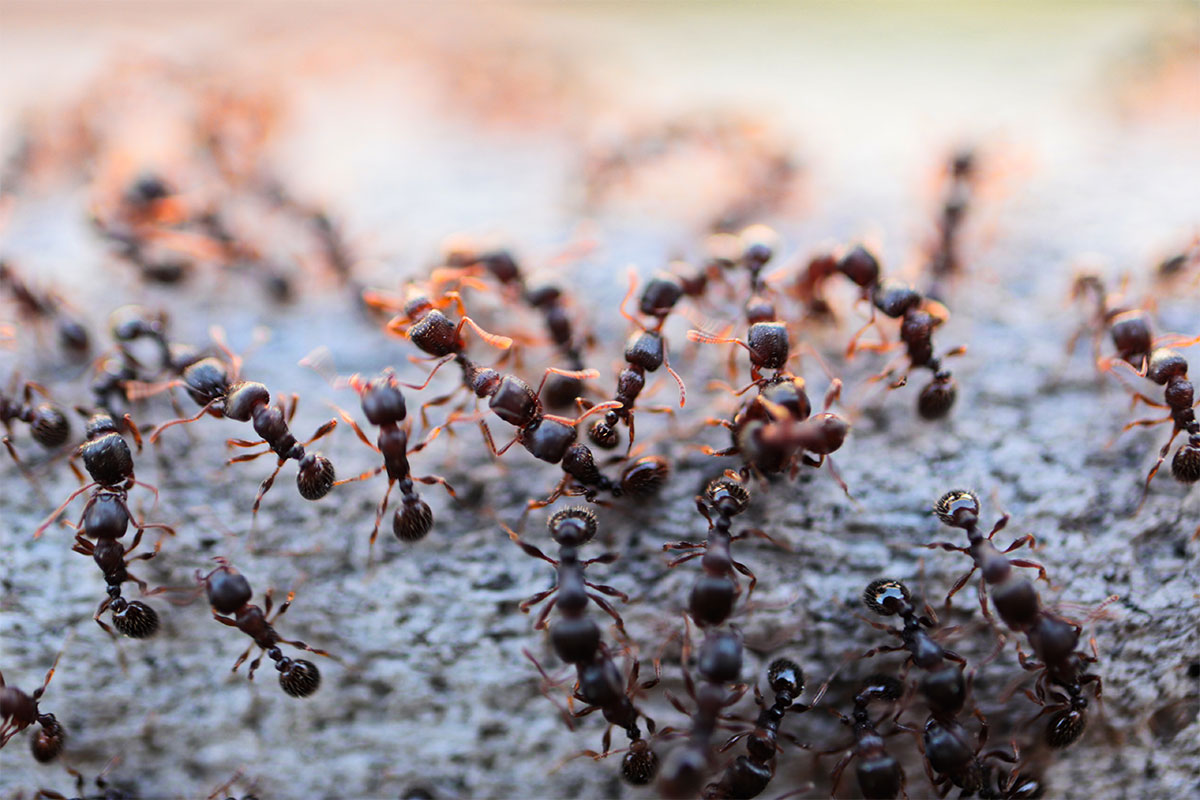
Sydney’s warm climate provides ideal conditions for ants to thrive throughout the year. Ant colonies often establish themselves close to food sources and moisture, making residential and commercial properties a perfect environment.
Common areas where ants appear include:
- Kitchen benches and cupboards
- Food storage areas
- Pantries
- Garden beds and lawns
- Outdoor patios and entertaining areas
- Wall cavities and roof spaces
Ants are highly organised insects that travel in long trails from their nest to food sources. Even if you remove the visible ants, the colony will continue sending more workers unless the nest itself is properly treated.
Professional ant control focuses on eliminating the colony at its source, providing a long-term solution rather than a temporary fix.
Types of Ants Commonly Found in Sydney
Several ant species are commonly found in Sydney homes and commercial properties.
Black Ants
- Black ants are one of the most frequently encountered species in homes. They are attracted to food sources, particularly sugary foods, and often enter kitchens and pantries.
Coastal Brown Ants
- These ants build nests in soil, paving cracks, garden beds, and wall cavities. They can quickly establish multiple colonies around a property.
Carpenter Ants
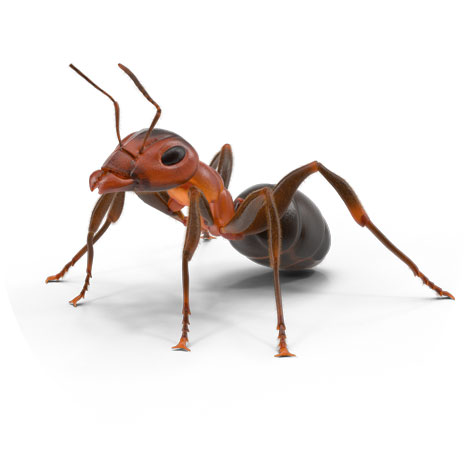
- Carpenter ants can nest in timber and structural wood, potentially causing damage to buildings if the infestation becomes severe.
Argentine Ants
- Argentine ants form very large colonies and are known for invading homes in large numbers, especially during warmer months.
Our technicians identify the species involved and apply targeted treatment strategies designed specifically for that type of ant infestation.
Understanding the Cockroach Challenge:
Seasonal Ant Activity in Sydney - When Ants Are at Their Worst
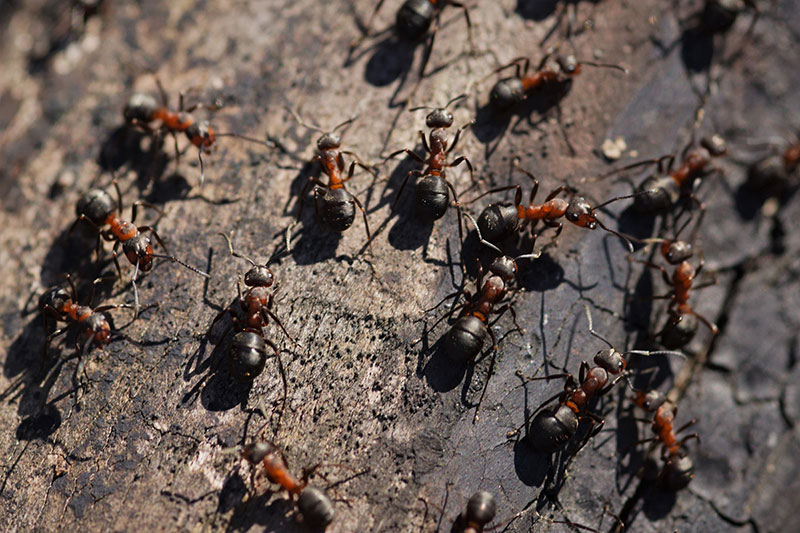
Ants are active year-round in Sydney’s warm climate, but their behaviour and the species involved change significantly with the seasons. Understanding when and why ants invade can help you stay ahead of infestations – and know exactly when to call for professional treatment.
Summer (December – February): Peak Invasion Season
Summer is when ant infestations are most severe across Sydney. The heat drives ants to seek cooler conditions and moisture inside your home. Kitchens, bathrooms, and laundries become targets as ants search for water during dry spells.
Argentine Ants are particularly aggressive in summer, forming enormous super-colonies that can span multiple neighbouring properties. If you’re seeing unusually large numbers of small, dark ants streaming in from multiple entry points, Argentine Ants are the most likely culprit.
Coastal Brown Ants also peak in summer, with worker ants foraging up to 50 metres from the nest in search of food and water. Long trails along fencing, driveways and brick paving are a telltale sign.
Spring (September – November): Colony Expansion
Spring triggers rapid ant colony growth. Queens begin producing new workers after winter, and existing colonies expand significantly. This is when you’ll notice ant trails establishing for the first time around garden beds, paving, and the base of exterior walls.
Black House Ants are most active in early spring as they establish foraging routes from nests in garden beds, wall cavities and under concrete slabs into kitchens and pantries.
Spring is the best time for a preventive treatment – treating before a full infestation develops is faster, cheaper and more effective than responding to an established colony.
Autumn (March – May): Pre-Winter Food Stockpiling
As temperatures cool, ants intensify their foraging activity to stockpile food reserves before winter. This often results in a surge of ants appearing inside kitchens and food storage areas in March and April – even in properties that haven’t had issues during the summer.
Carpenter Ants become more visible in autumn as they scout for new nesting locations in sheltered timber structures. Properties with older timber decking, pergolas, or subfloor framing should be inspected at this time of year.
Winter (June – August): Reduced but Not Gone
Ant activity reduces in winter but does not stop entirely. In Sydney’s mild winters, ants in wall cavities and subfloor spaces remain active – they simply move deeper into insulated areas of your home. Winter is an ideal time to address existing ant issues before populations rebuild in spring.
Signs You May Have an Ant Infestation
Ant infestations often start small but can escalate quickly. Some common signs include:
- Ant trails moving along floors, walls, or kitchen surfaces
- Ants appearing around food or rubbish bins
- Small piles of soil near paving or garden areas
- Ants entering through wall cracks or windows
- Ant nests forming in lawns, gardens, or paving gaps
If you notice ants repeatedly returning after cleaning or spraying, there is likely a large colony nearby that requires professional treatment.
How Our Ant Control Treatment Works - A Species-Specific Approach
There is no single solution that works for every ant infestation. The treatment method that eliminates an Argentine Ant super-colony is very different from the approach needed for Carpenter Ants nesting inside a timber pergola. At On Call Pest Control, our technicians identify the species first – then apply the treatment method that targets that specific ant’s biology, nesting behaviour, and foraging patterns.
Step 1 – Inspection & Species Identification
Every ant treatment begins with a thorough inspection of your property. Our technician will trace ant trails back to entry points, identify likely nesting sites and confirm the ant species involved. This step is critical – an incorrect identification leads to an ineffective treatment, and potentially makes the problem worse.
We inspect high-activity zones, including kitchen and bathroom plumbing, subfloor areas, roof voids, wall cavities, garden beds, paving joints, retaining walls and any timber structures on the property.
Step 2 – Targeted Colony Baiting (Argentine Ants & Black House Ants)
Argentine Ants and Black House Ants are best treated with a targeted baiting program. Unlike surface sprays that simply repel ants (causing the colony to split and relocate), professional-grade ant baits exploit the ants’ own foraging behaviour.
Worker ants collect the bait, which is formulated to look and smell like food, and carry it back to the nest, where it is fed to the queen and brood. This transfer kills the entire colony over 24–72 hours, including ants that were never visible at the surface. This is why baiting produces far more complete and lasting results than spray treatments alone.
Our technicians select between sugar-based and protein-based baits depending on the species and season, as feeding preferences shift throughout the year. Using the wrong bait type significantly reduces effectiveness.
Step 3 – Residual Perimeter Barrier Treatment
A non-repellent residual insecticide is applied around the perimeter of the property – along the base of walls, around door and window frames, and along known ant trails. Because it is non-repellent, ants cannot detect it and walk directly through the treated zone, picking up the insecticide and transferring it to other colony members.
This barrier treatment provides ongoing protection for 3 – 6 months, depending on the product used, weather conditions and the level of infestation.
Step 4 – Nest Dusting for Carpenter Ants & Wall Cavity Nests
Carpenter Ants require a different approach. Because they nest inside timber structures – wall cavities, roof voids, subfloor framing and pergolas – direct nest treatment is essential. Our technicians apply a fine insecticide dust into the nesting void using specialist dusting equipment.
The dust adheres to the ants’ bodies and is spread through the colony as ants move and groom each other, delivering the treatment to areas that sprays cannot reach. Nest dusting is also used for Coastal Brown Ants nesting in wall cavities and behind brickwork, where liquid sprays are ineffective.
Step 5 – Direct Nest Treatment (Where Accessible)
Where ant nests can be located and accessed – in garden beds, under pavers, in lawn areas or around retaining walls – we apply direct nest treatments using insecticide injections, granular treatments or drenches. Direct nest treatment produces the fastest results and is the most thorough method when the nest is accessible.
Step 6 – Prevention Advice & Follow-Up
Once the treatment is complete, our technician will walk you through the property and identify conditions contributing to the infestation — food sources, moisture issues, entry points and landscaping factors. We provide practical, property-specific advice to reduce the risk of re-infestation.
All our ant control treatments come with a re-treatment guarantee. If ants return within the warranty period, we will re-treat at no additional cost.
DIY Ant Treatment vs Professional Pest Control — Why Sprays Keep Failing
If you’ve sprayed the ants, watched them disappear, and then seen them come back a week later, you’re not alone. This is one of the most common complaints we hear from Sydney homeowners. The problem isn’t that you didn’t spray enough. The problem is that most over-the-counter sprays are specifically designed in a way that makes ant infestations worse.
Why Supermarket Sprays Don't Work on Established Infestations
The ants you can see represent only 5 – 10% of a colony. The vast majority – including the queen and the brood – are underground or inside the walls, never coming into contact with surface sprays.
Most consumer ant sprays use repellent insecticides. When ants encounter a repellent spray, they don’t cross it – they simply find another route. More critically, a process called colony splitting or budding occurs: the colony detects a threat and the queen produces new queens that split off to form satellite nests in new locations around your property. What started as one nest in the garden bed can become four nests – under the patio, behind the kitchen wall, under the subfloor – after repeated spray applications.
This is why ants seem to reappear in different areas after spraying. The spray didn’t solve the problem; it spread it.
| DIY supermarket spray | On Call professional treatment | Winner | |
|---|---|---|---|
| Kills the colony? | No – kills visible ants only | Yes – targets queen and entire nest | Professional |
| Repellent effect? | Yes – causes colony splitting | No – non-repellent products used | Professional |
| Species identification? | No – generic product | Yes – treatment matched to species | Professional |
| Longevity of result | Days to 1 – 2 weeks | 3 – 12 months with re-treatment guarantee | Professional |
| Safe application | Risk of over-application | TGA-approved, applied to guidelines | Professional |
| Cost (short term) | Low ($8 – $25 per spray) | Higher upfront – see quote | DIY |
| Cost (long term) | High – repeat purchases add up | Lower – one treatment, lasting result | Professional |
| Reaches wall cavity nests | No | Yes – dust & bait penetrate voids | Professional |
Residential Ant Control Sydney
Ant infestations are extremely common in homes throughout Sydney. Once ants discover a reliable food source, they will continue returning in large numbers.
Our residential ant control services help protect:
- Houses
- Apartments and units
- Townhouses
- Rental properties
- Outdoor entertaining areas
We use safe and targeted treatments designed to effectively control ants while minimising disruption to your household.
Commercial Ant Control for Sydney Businesses
- Restaurants and cafés
- Offices and commercial buildingss
- Warehouses and storage facilities
- Retail stores
- Hospitality venues
How to Prevent Ants in Your Sydney Home - Expert Tips
Professional treatment eliminates your current ant problem, but the conditions that attracted ants in the first place can allow new colonies to establish if they’re not addressed. The following steps, recommended by our licensed technicians, significantly reduce the risk of recurring ant infestations in Sydney homes.
Inside the Home
- Store all food – particularly sugar, cereals, pet food and fruit – in sealed, airtight containers. Ants can detect food sources from a significant distance and will reliably return to any area where food residue is accessible.
- Wipe down kitchen benches, splashbacks and stovetops after cooking. Even a light residue from spills or cooking fats is enough to attract scout ants, which then recruit the rest of the colony to the food source.
- Empty and clean rubbish bins regularly. Kitchen bins with organic waste are one of the most common ant attractants inside Sydney homes.
- Fix leaking taps, pipes and drainage issues promptly. Ants require water and are strongly drawn to damp areas – particularly under sinks, around dishwashers and in laundry areas.
- Seal cracks and gaps around skirting boards, window frames, door frames and where pipes enter walls. These are the primary entry points for ants in established homes.
Outside the Property
- Keep a clear zone of at least 150 – 200mm between garden beds, mulch, lawn edges, and the external walls of your home. Mulch and garden beds directly against the structure provide ideal ant nesting conditions and give colonies immediate access to your home.
- Trim trees, shrubs, and overhanging branches away from the roof and eaves. Ants use vegetation as bridges to access roof spaces and upper-storey entry points that would otherwise be inaccessible.
- Clear leaf litter, compost piles and timber debris from around the property perimeter. Decaying organic matter retains moisture and provides shelter for ant colonies, particularly Coastal Brown Ants and Carpenter Ants.
- Check that weep holes in cavity brick walls are not blocked and are fitted with weep hole covers where possible. Ants readily use open weep holes as direct entry points into wall cavities.
- Move firewood, building materials, and stored items away from the base of the home. Stacked timber or stored materials in contact with the ground are a prime nesting site for Carpenter Ants and Coastal Brown Ants.
After a Professional Treatment
- Do not clean or mop treated surfaces for 48 – 72 hours after treatment. Washing removes the residual product before it has time to act. Your technician will advise on specific precautions for your property.
- Keep bait stations undisturbed if installed. Bait works slowly by design – moving or removing them interrupts the colony elimination process.
- Contact us within the warranty period if ants return. All our treatments come with a re-treatment guarantee – if ants come back, we will return at no additional charge.
Customer Testimonials
See what our customers across Sydney are saying about our reliable pest control services.
EXCELLENTTrustindex verifies that the original source of the review is Google. Very professional service. The guys were punctual and did a fantastic job!Posted onTrustindex verifies that the original source of the review is Google. We contacted On Call Pest Control a couple of years ago by chance as we weren’t happy with our old pest company (after using the old one for many years) and had made the best decision!! My only regret is not finding OCPC earlier as Dale and Blake are awesome people!! Support your small family business everyone!!!!!! If you are reading this, then you are looking for some pest control and looking at the reviews, well I guarantee you will make the right choice by choosing Dale and his son Blake. Service is awesome and the spraying is super thorough, you will not see bugs, spiders or roaches for a long time!!!!!! Again, support our local family business everyone ? WillPosted onTrustindex verifies that the original source of the review is Google. Dale is a professional pest control specialist who know what he is doing, thank you again for your visitPosted onTrustindex verifies that the original source of the review is Google. My wife & I were needing a good pest controller as we were having an issue with mice. Dale came to the house & spotted the problem in no time, did a very thorough & professional job and now my house is rodent free. I would highly recommend this company to any business or home that is having problems with rodents & need a reliable pest controller. Thanks again Dale for all your helpPosted onTrustindex verifies that the original source of the review is Google. Brilliant service. Did exactly what was promised, and more than delivered. Very impressed. Very happy customerPosted onTrustindex verifies that the original source of the review is Google. Great Service, happy with the end result. Highly recommended!Verified by TrustindexTrustindex verified badge is the Universal Symbol of Trust. Only the greatest companies can get the verified badge who has a review score above 4.5, based on customer reviews over the past 12 months. Read more
Contact Information
Please use the following details to contact us.
- 0426 511 911
- info@oncallpestcontrol.com.au
- 215-219 George Street Liverpool NSW 2170 Australia
Contact Us
Please fill out the following form to contact us. One of our team members will get back to you as soon as possible.